


At a retailer’s Monday trading meeting, finance and operations can open the pack on the same margin figure and see which products lost money after freight. The buyer can use that meeting to decide which lines to reprice. Today, the team spends much of that time rebuilding the pack in spreadsheets.
Moving that retailer from spreadsheets to a trading pack that refreshes in time for Monday’s meeting can take two months. For an agreed scope across the core systems, that is a realistic delivery conversation.
Until about a year ago, that journey typically took around 12 months. AI has changed how much we can get built, checked and into use within the same engagement. For the retailer, those months matter. Every order shipped before the buyer spots a loss-making line is another sale at the old price.
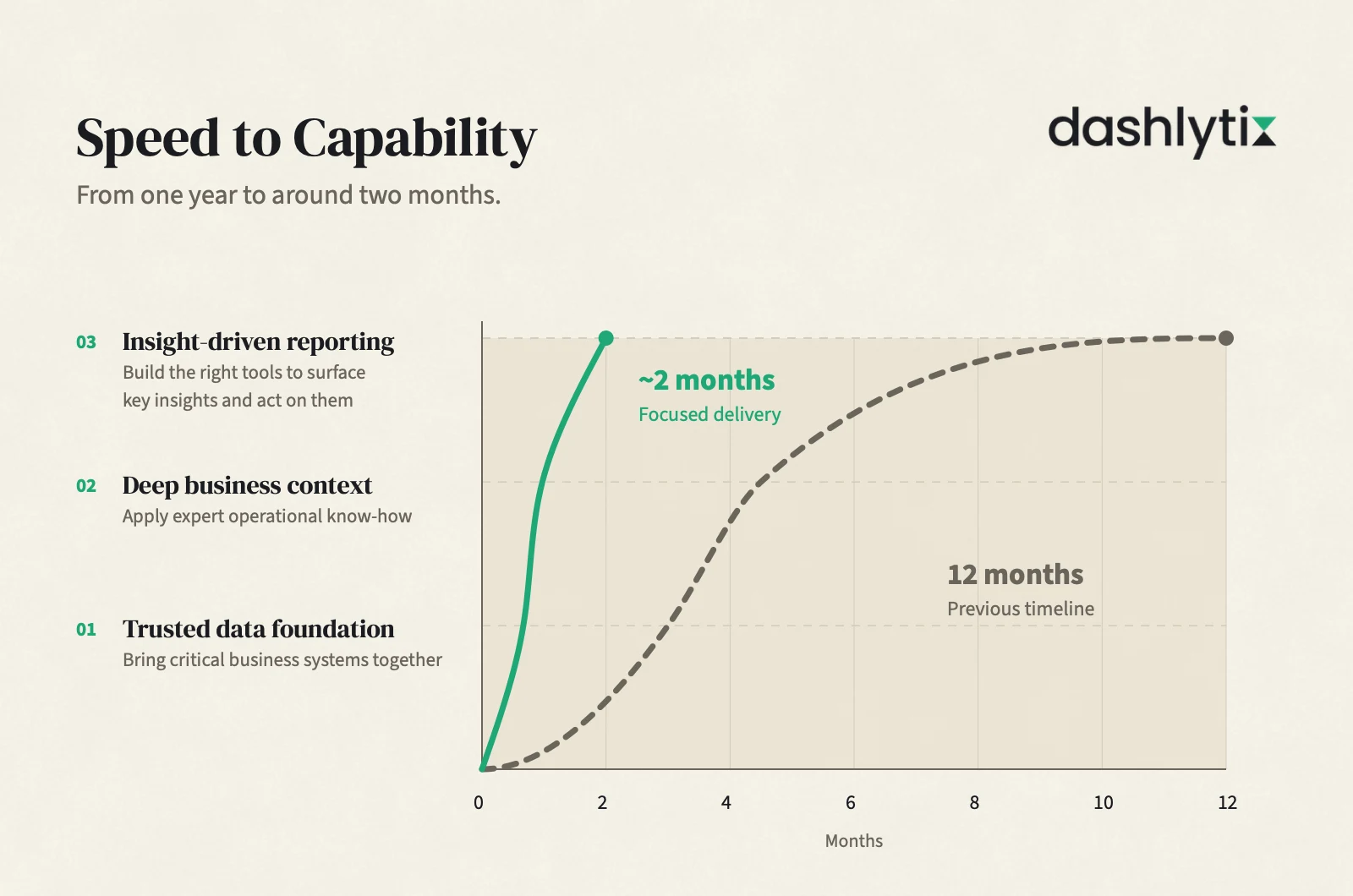
What should be working at the end?
For this retailer, that means bringing sales from Shopify or a point-of-sale system, product costs from the ERP and freight invoices from the 3PL into a central warehouse, such as BigQuery. The important measures have agreed definitions. Reports refresh from that foundation, and people can investigate the questions behind the numbers through the reporting and analysis tools included in the scope. Data updates are monitored, access is controlled and someone is responsible for keeping it working.
That is a substantial change for a team that previously had to assemble, reconcile and explain the same spreadsheets every week.
Our experience gives AI a head start
The exciting part is how much of our experience we can now put to work at once.
Years of building data platforms have taught us where projects get stuck: systems that disagree, business rules nobody has written down, and calculations that look right until someone from operations checks them. We know what to look for, which questions to ask and what a good result should look like.
We can now turn that experience into instructions, reusable patterns and checks that guide AI through the build. Pipelines, data models, tests and reports move forward much faster because the AI has a clear approach to follow, and an experienced practitioner directing it.
For the Monday pack, the retailer’s finance and operations teams agree how returns, freight and discounts affect the margin on each product. AI then helps carry those decisions through the models and reports, while we reconcile the results and work through exceptions.
That changes the pace of the whole engagement. Clients get something they can use while the conversation is still fresh. We can test an idea, uncover a problem and improve the result in the time we previously spent getting the first version built.
The expertise we’ve accumulated over years can now accelerate far more of the work. That’s what makes this such a good time to get started.
How we get from the first connection to the first decision
Bring the critical systems together
We begin with the decisions the client needs to make and identify the systems that hold the relevant information. That keeps the build focused on data people will actually use.
As the data comes together, we check it against the source systems. Missing transactions, duplicated customers and differences in reporting dates need to be understood. We put the data feeds on a repeatable schedule and establish checks for failed or incomplete updates. The client gets a foundation that stays current without someone rebuilding it in a spreadsheet.
Make the numbers mean the same thing
We work with the client’s finance and operational people to resolve the definitions that affect the result. If sales excludes returns in one report and includes them in another, the warehouse alone will not settle the disagreement.
Those decisions become part of the models and business context used by the reporting and AI. The client can review the calculation, see how it relates to familiar figures and challenge an exception. Agreeing a rule once and applying it consistently removes repeated reconciliation from the team’s working week.
Put working tools in people’s hands
We bring reports and analysis into the review as the underlying data and definitions become ready. People can test them against questions they already need to answer.
The retailer’s Monday pack shows where margin fell. Dash, our data and insight agent, lets the buyer ask, “Which SKUs went negative after freight last month?” Dash uses the same margin calculation as the pack. The buyer can check the freight charges on those lines and decide whether to reprice the product or change what customers pay for delivery.
Feedback becomes part of delivery. If a cost is missing or a definition does not reflect how the business operates, the team can correct it in the underlying model and check the result again. That is how the team gains confidence while the capability is being built.
Beyond retail
A third-party logistics provider can bring warehouse and transport data together to see which orders missed a customer’s dispatch deadline.
A field-services team can compare labour, parts and travel costs with the original quote to see which jobs are eroding margin.
Trust is part of what we deliver
A team should be able to explain why it is comfortable using the new numbers. We validate important measures with the people who know them, make the calculations traceable to their source data and check that users see only what they are entitled to access.
For AI-supported analysis, the working needs to be available to inspect: which data was queried, which definitions were applied and where the answer came from. A polished explanation earns confidence when the team can verify it.
The delivery plan also needs to account for access to systems, time with business owners and the condition of the source data. We agree on the dependencies before committing to a timeline. Faster implementation makes an ambitious schedule possible; those checks make it credible.
The payoff starts when the team uses it
The first test is the next performance meeting. Can the team spend less time assembling the pack and more time deciding what to do? Can someone investigate a margin movement without starting another spreadsheet exercise? Can finance and operations work from the same figure and understand how it was calculated?
Record the time spent preparing the current pack before the build and compare it once the tools are in use. Track how quickly the team can investigate a margin exception, too. The next priority can then build on a working foundation, with the definitions and corrections already agreed.
If you have been putting the work off because it looked like a year-long undertaking, it is worth having the conversation again. Request a 45-minute scoping session and bring the questions your team struggles to answer. We can work out what could be live in two months, what is needed to get there and how you will know it is ready to trust.